
Bain & Company
Strategic Design Internship
Project 1: Assisted Tax Service
Reducing pre-appointment drop-off by designing a concierge experience
Role
Service designer
Timeline
Jul - Aug, 2025
(8 weeks)
Skills
Research
Strategy
Stakeholder alignment
Team
2 Designers
6 Business consultants
3 Partners
Business challenge
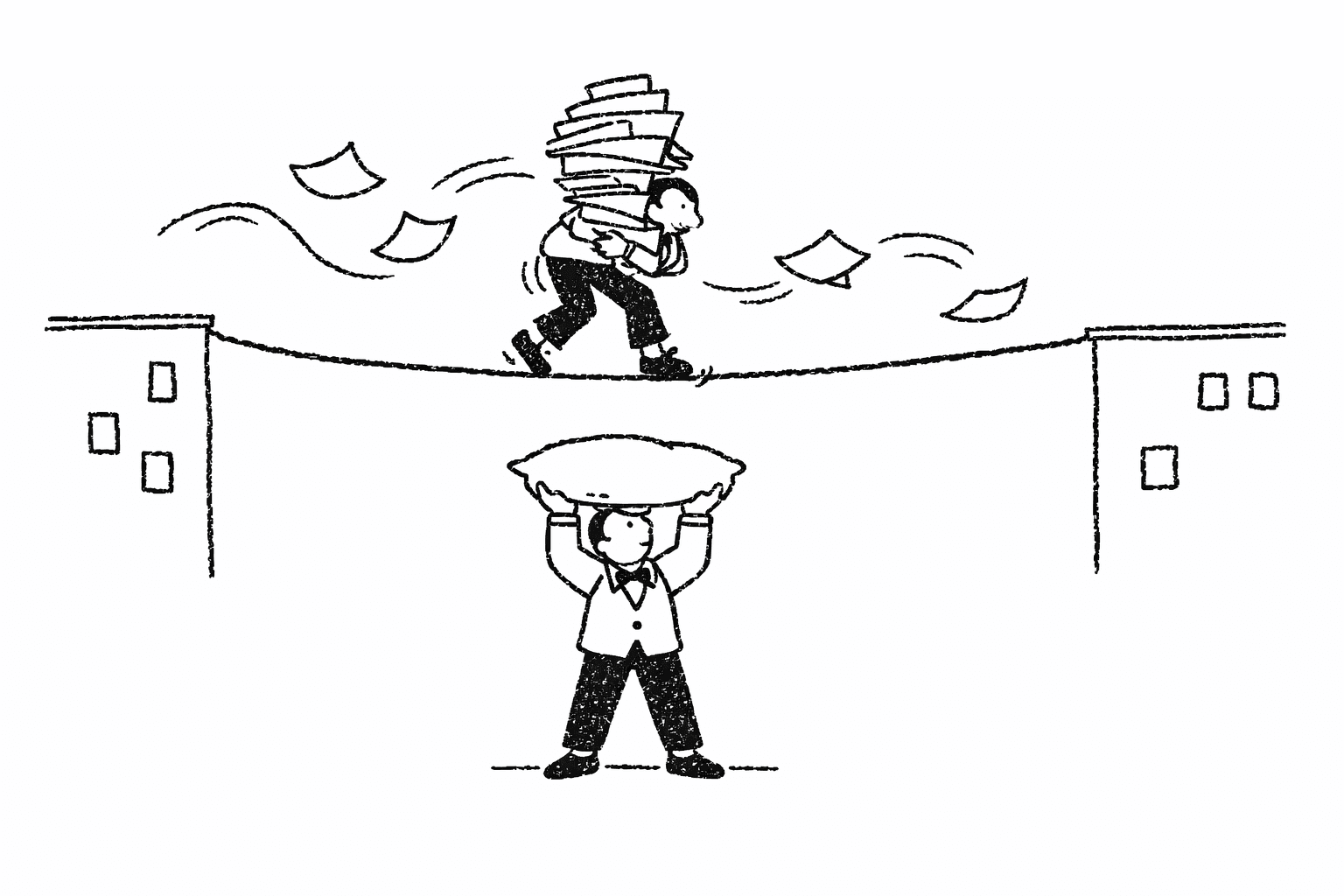
Customers were disengaging before their first appointment, losing the chance to convert interest into revenue
Solution
Fintech Co was launching a new “Concierge” role to support Assisted tax filers
What I worked on
I supported on defining the future state of how customers will be connected to tax experts
My impact
I defined key Moments of Truth, aligning cross-functional stakeholders, shaping pilot scope and the concierge training rollout
I developed a future-state journey map that was adopted across CX, CRM, Product, and Ops, and directly informed PRD development
I structured a phased tech capability roadmap tied to the future-state journey, which translated into buildable requirements for Engineering and PM
Results
Successfully launched pilot and launched concierge training
Enabled phase 2 to roll out and extend company’s partnership contract with client
Learnings
Research as foundation, not decoration
At Bain, "Has research been done?" was asked constantly. Whether it be previous case work, expert calls with competitors, or secondary research, working from validated research was the fastest way to become an expert in an unfamiliar space.
Speaking the language of stakeholders to influence design
Instead of presenting a journey map as a UX artifact, I framed it as an operating model and connected it to business impact. Influencing design often starts with creating clarity on how the design work supports others.
If you are interested in learning more, feel free to contact me at
Project 2: 3D Modeling for Engineers
Simplifying how engineers go from concept to 3D model
Role
Product designer
Timeline
Aug 2025
(3 weeks)
Skills
Rapid prototyping
User testing
Collaboration
Team
2 Designers
2 Product strategists
5 Engineers
Business challenge
Designing electrical substations is a slow, manual process that costs the business
Designing electrical substations begins with a single line diagram (SLD) — a 2D logical representation of electrical systems
To move into production, engineers must manually translate that diagram into a detailed 3D CAD model
Solution
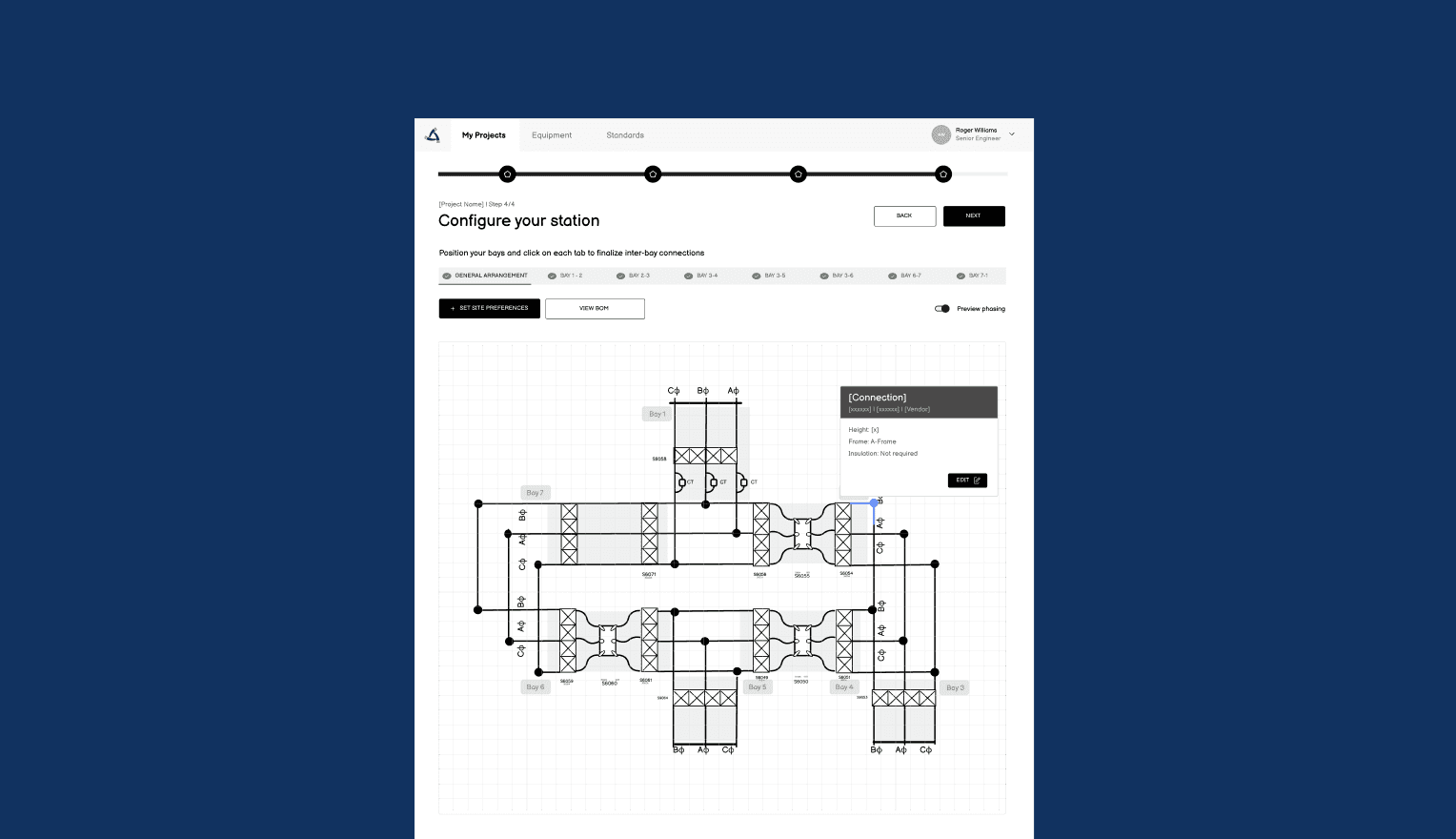
An internal digital tool that enables engineers to transform a SLD into a CAD-ready layout through an interactive, guided modeling flow
What I worked on
I drove early-stage product discovery through rapid prototyping and user testing to define the product’s core interaction model
My contributions
Defined and iterated on the end-to-end core flow through 7 iterations, earning green light from clients to move into high-fidelity
Pioneered an interactive map allowing engineers to:
Drag and place equipment
Automatically validate compatibility
Visually map SLD logic to physical layout
Reflection
Compatability is a UX problem, not just an engineering footnote
Compatability is not just defined by technical constraints, instead user research informs on mental models and behaviors that shape the affordances and functionality of the final product
Learning when to trust user input and when to challenge it
Product discovery is about uncovering underlying needs, and often times users' initial feedback is about feature requests and nice-to-haves. The challenge lies in differentiating between how users actually work apart from blue-sky ideals